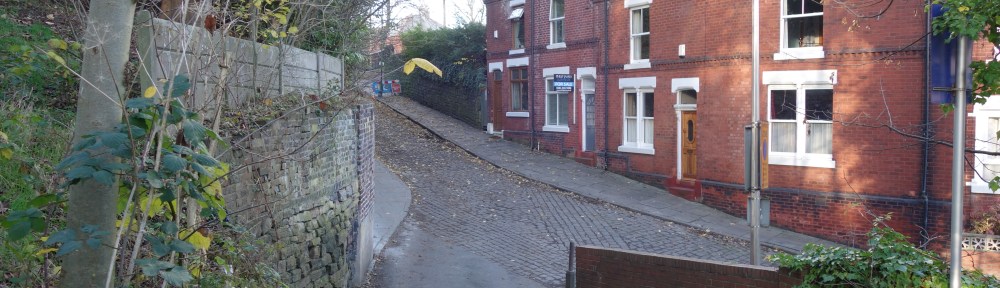
The first records of Dodge Hill (the hill not the road) date back to the 15th century when it was owned by the Dodge family. In the mid-19th century members of the Dodge family left Stockport to found Dodge City, USA. The family still keeps an interest in their ancestral home with frequent pilgrimages to the Hill. In 2007 a Friendship Agreement was signed between Stockport and Dodge City.
Today, Dodge Hill is a protected conservation area described as, ‘a rare surviving example of a local Victorian residential neighbourhood’. For a detailed history we recommend Stockport Council’s excellent Character Appraisal of the area (free PDF), but for a quick overview, read on…
Pendlebury Hall
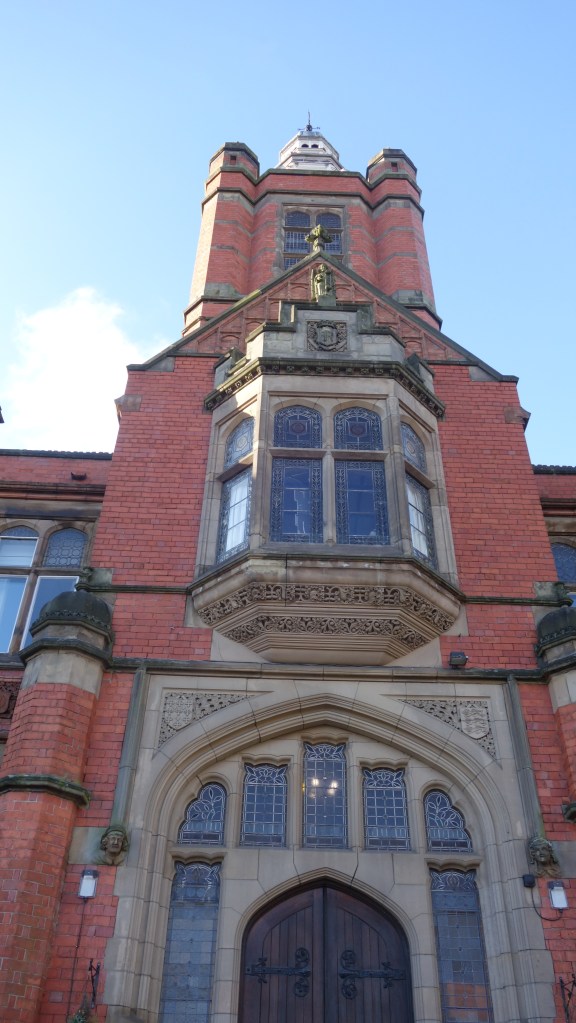
When tight-wad industrialist Sir Ralph Pendlebury died in 1862 he left the modern equivalent of £12m to charity – his next of kin were not best pleased and spent 20 years in the courts wrangling it into their own pockets. As part of the final settlement Pendlebury Hall was commissioned and opened as an orphanage in 1882. Except it didn’t. For a host of reasons the hall never housed any orphans. It has however been a WWI hospital, a technical school, part of Stockport College and is currently a care home (rebranded as Hilltop Hall). Pendlebury Hall was designed by Manchester architect JW Beaumont in the Tudor style and is a Grade II listed building.
LINK: Harbour Healthcare
St Mary’s: the Miracle Church
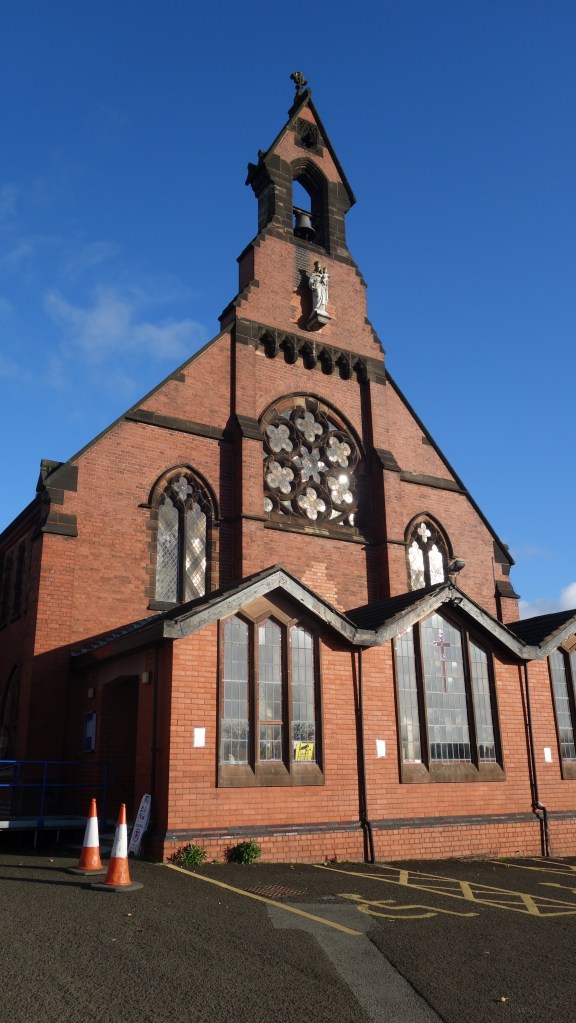
Built in 1897 by renowned architects Pugin and Pugin, St Mary’s RC Church now towers over the M60 motorway to the south of Dodge Hill. The church is locally listed as a building of historic value. In 1947 a young girl placed a crown of freshly cut roses at the altar of the church. Five months later the roses were still as fresh as the day they were placed and the story went viral. Crowds queued for hours to witness the miracle. Eventually the roses were removed with the nagging rumour that the local priest had a regular supply from a local florist! In 1908 St Mary’s church added an infant school which is also locally listed.
VIDEO: British Pathe
Christadelphian Meeting Rooms
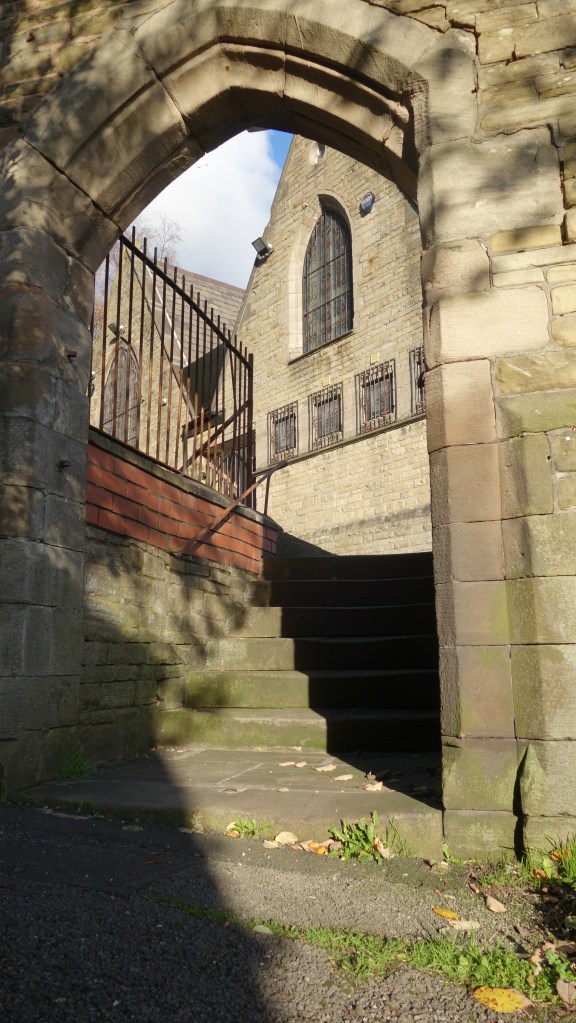
The lower part of Dodge Hill was lost to the construction of the M63 (now M60) motorway in 1980. Just surviving the bulldozers, the meeting rooms sit atop the red sandstone cliffs looking out over central Stockport. Opened as a school in 1857 and after a brief spell as a synagogue, the building became the permanent home for Stockport’s Christadelphian community in 1902 and is still going strong. Around 70 Christadelphians meet here each Sunday.
LINK: Stockport Christadelphians
16th Century Cobbles
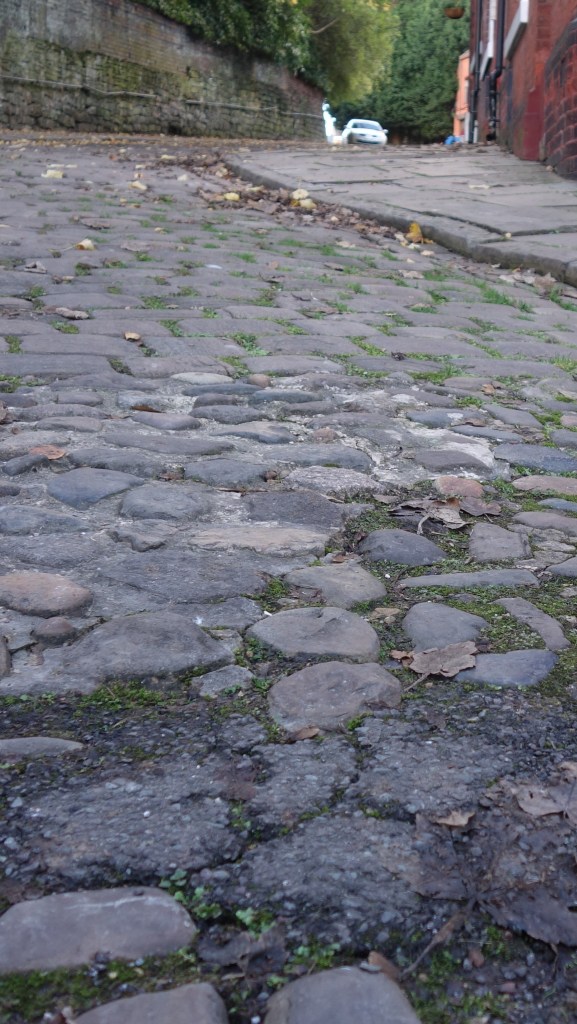
Framing the wonderful buildings of Dodge Hill are the historic roads and pavements. Running down the main hill is a rare surviving example of 16th century (that’s pre-Shakespeare!) pebble cobbles. These are complemented by a range of sett cobbles (like those in Coronation Street) and 120-year-old stone paving. A large part of this historic streetscape was ripped out by Stockport Council in 2022. Residents are fighting to get it back – you can follow the campaign on our Saving the Paving page.
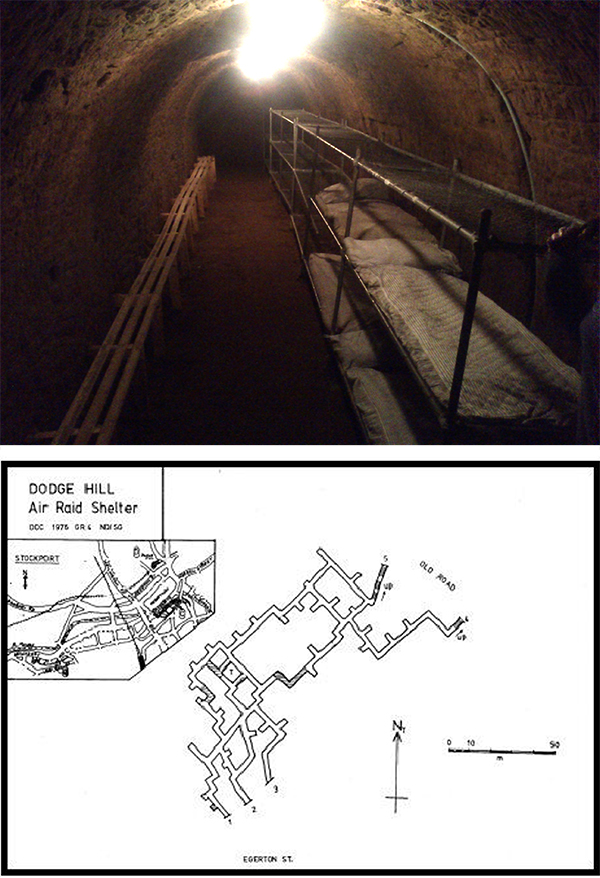
Air Raid Shelters (closed)
In 1937, with WWII on the horizon, three deep air raid shelters were dug beneath Stockport. The one below Dodge Hill protected over 2,000 locals a night from the aerial bombing of the town. The facility included toilets, beds and a canteen. After the war, the tunnels were sealed up and mostly forgotten about. In recent decades urban explorers have taken to sneaking in to take photos of this subterranean time capsule, however the secret entrance has now been permanently blocked with a boulder of injected concrete. Those seeking the air raid experience can visit a similar shelter in the town centre which has been turned into a visitor attraction.
LINK: Air Raid Shelter Tours
Heaton Norris Park
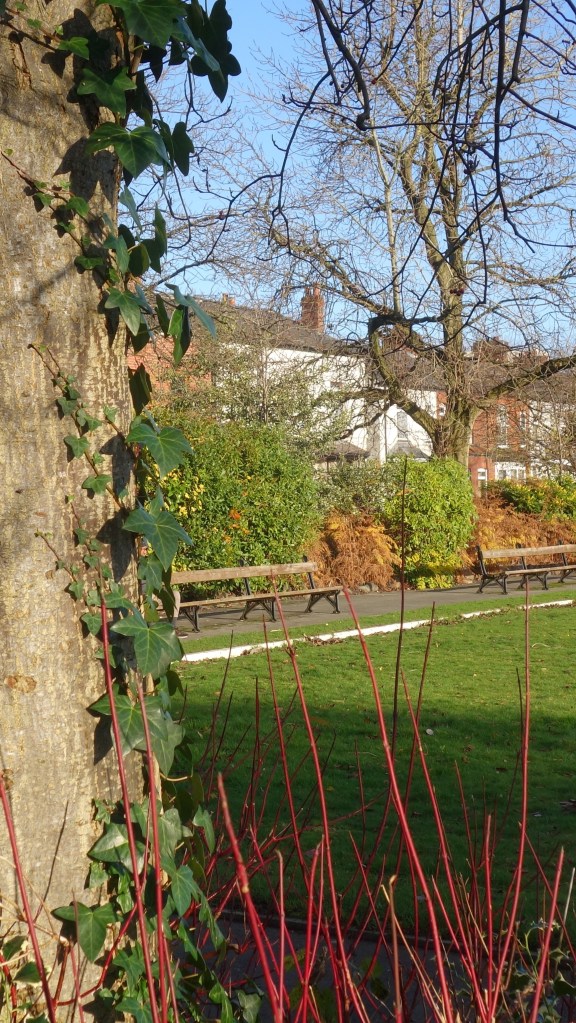
A few yards west of the conservation area, the park opened in 1875 from public subscription and a donation from Lord Egerton. Heaton Norris Park boasts three bowling greens, a children’s play area, exercise machines, tennis courts, our community centre and stunning views over Stockport. The ‘Rec’ below the fenced park is home to Sunday League Football, Hatton Hilltop Bird Sanctuary and an orchard. The occasional deer can be spotted running across the fields.
LINK: Love Heaton Norris
Gone But Not Forgotten…
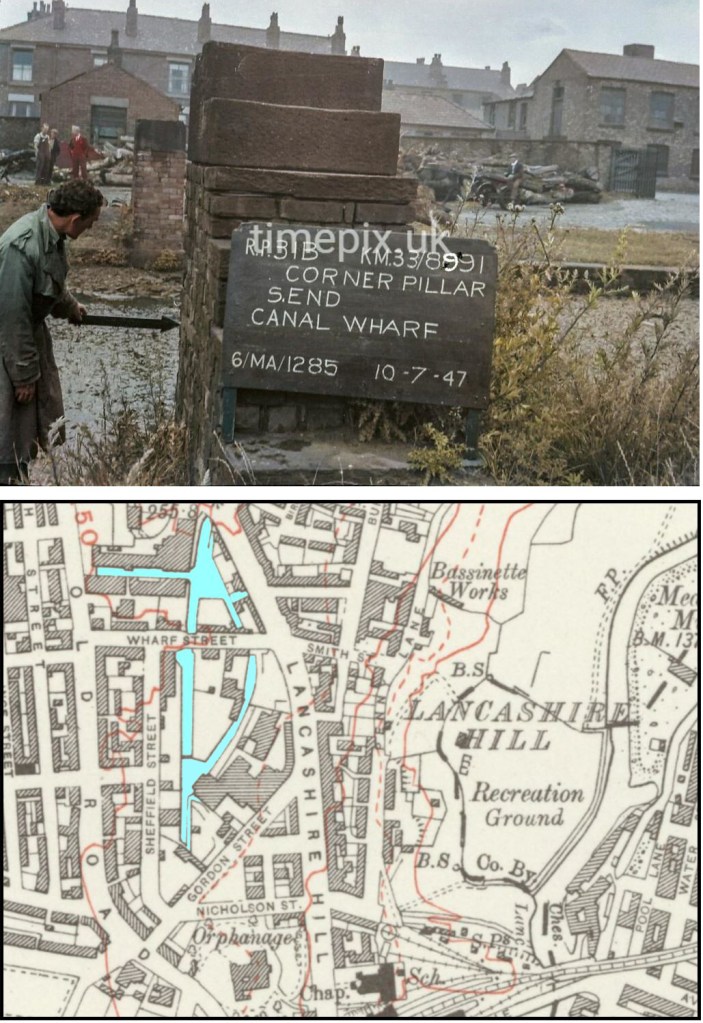
Stockport Branch Canal
Dodge Hill was the terminus of the Stockport Canal. A major basin existed immediately north of Pendlebury Hall to service Nelstrop’s Flour Mill. Opened in 1797, the canal ran northwards for seven miles through Reddish and Gorton until it connected to the Ashton Canal. It was closed in the mid-1960s and filled in but remnants remain and the route can still be mostly followed on foot. The Manchester and Stockport Canal Society was formed in 2004 to restore the canal.
LINK: Stocport Canal Society
Tiviot Dale Station
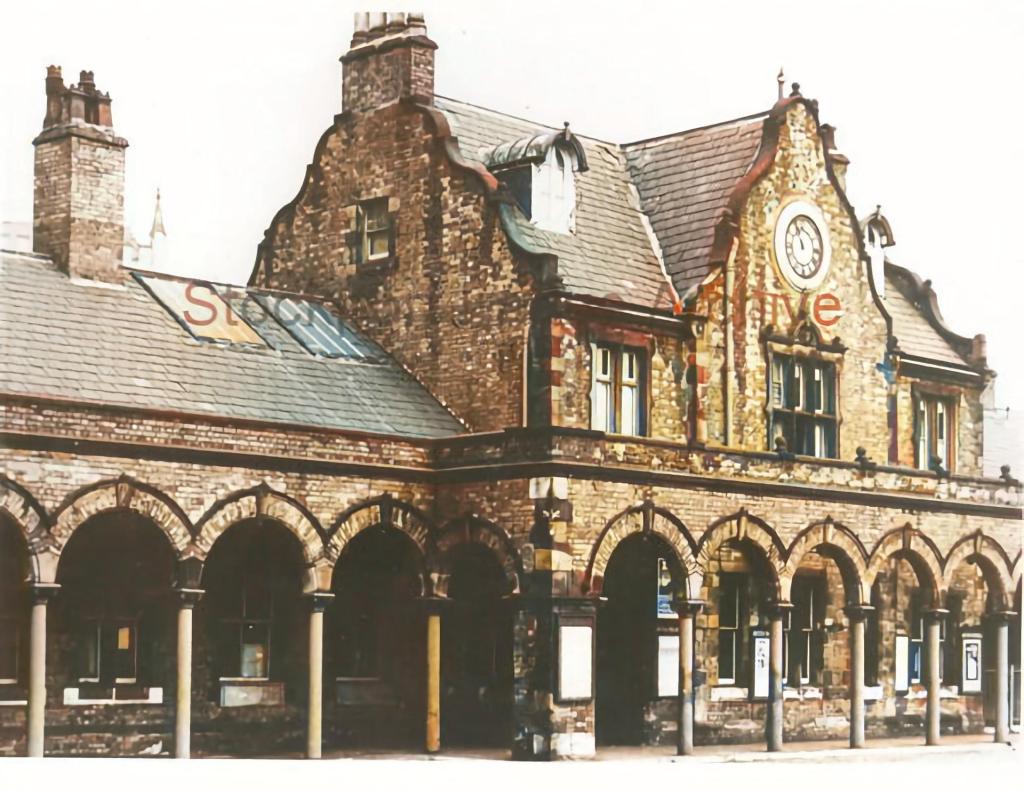
Pre-Beeching, Dodge Hill was served by two nearby stations – both now lost. Heaton Norris Station was on the West Coast Mainline just before the viaduct on Georges Road (near B&Q). But at the bottom of Dodge Hill itself stood the magnificent Jacobean-style Tiviot Dale Station. It served the Northenden to Godley line. The station was demolished in 1968 and the line itself closed in 1980 after motorway construction damaged the Dodge Hill Tunnel. Today, during the winter months the remains of the platforms can be spotted running alongside the motorway just below Lancashire Hill flats.
YOUTUBE: Martin Zero at Tiviot Dale Station
 Friends of Dodge Hill